CV examples to adapt to your experience
CV examples help you decide what to include and how to describe your work. Start with the guide closest to your experience, then replace every duty, date and achievement with your own information. This collection connects writing examples, skills guidance and an editable CV builder for applications in the UK and Ireland.
CV examples (15)
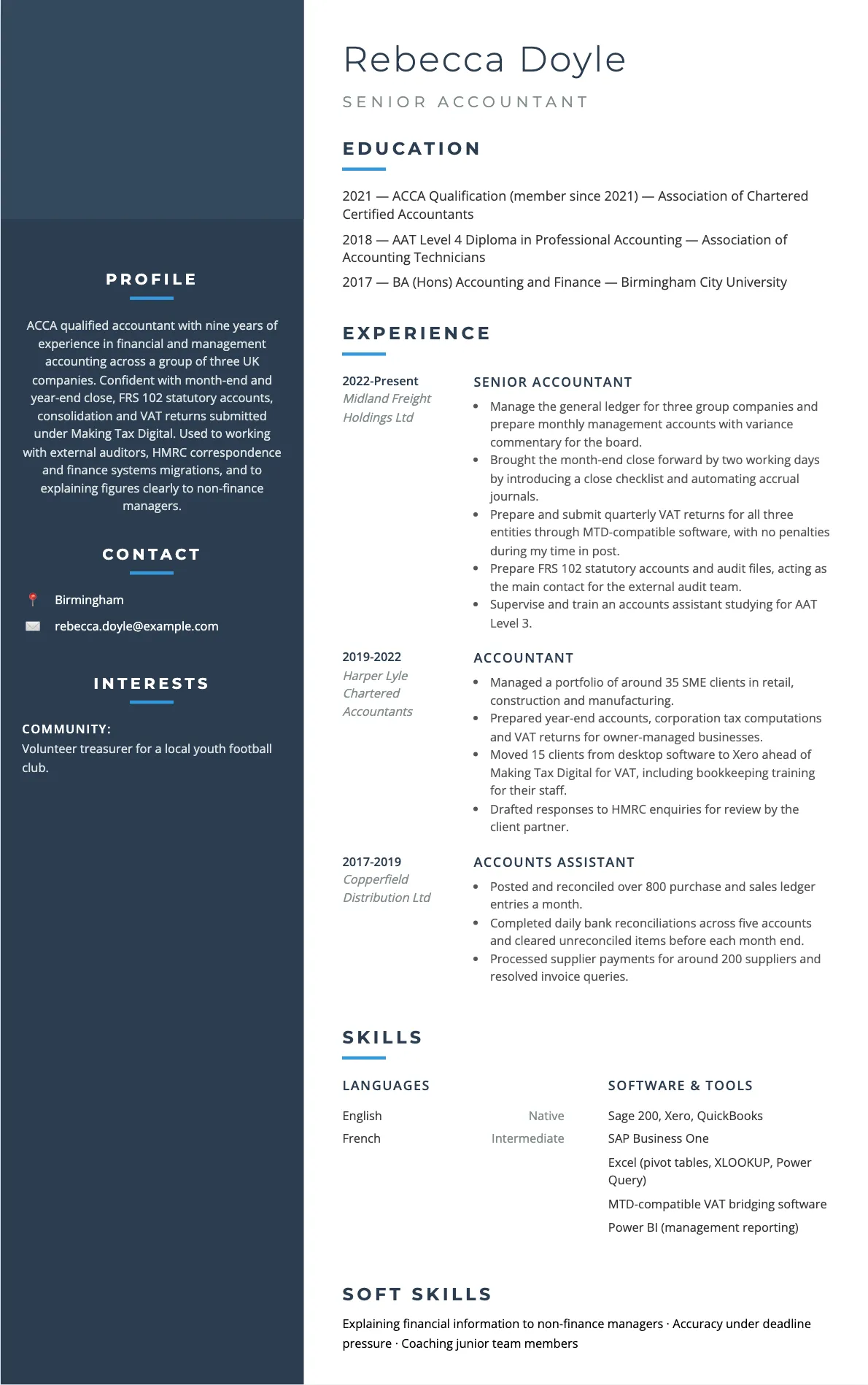
Accountant CV Example and Writing Guide for the UK
Read the guide →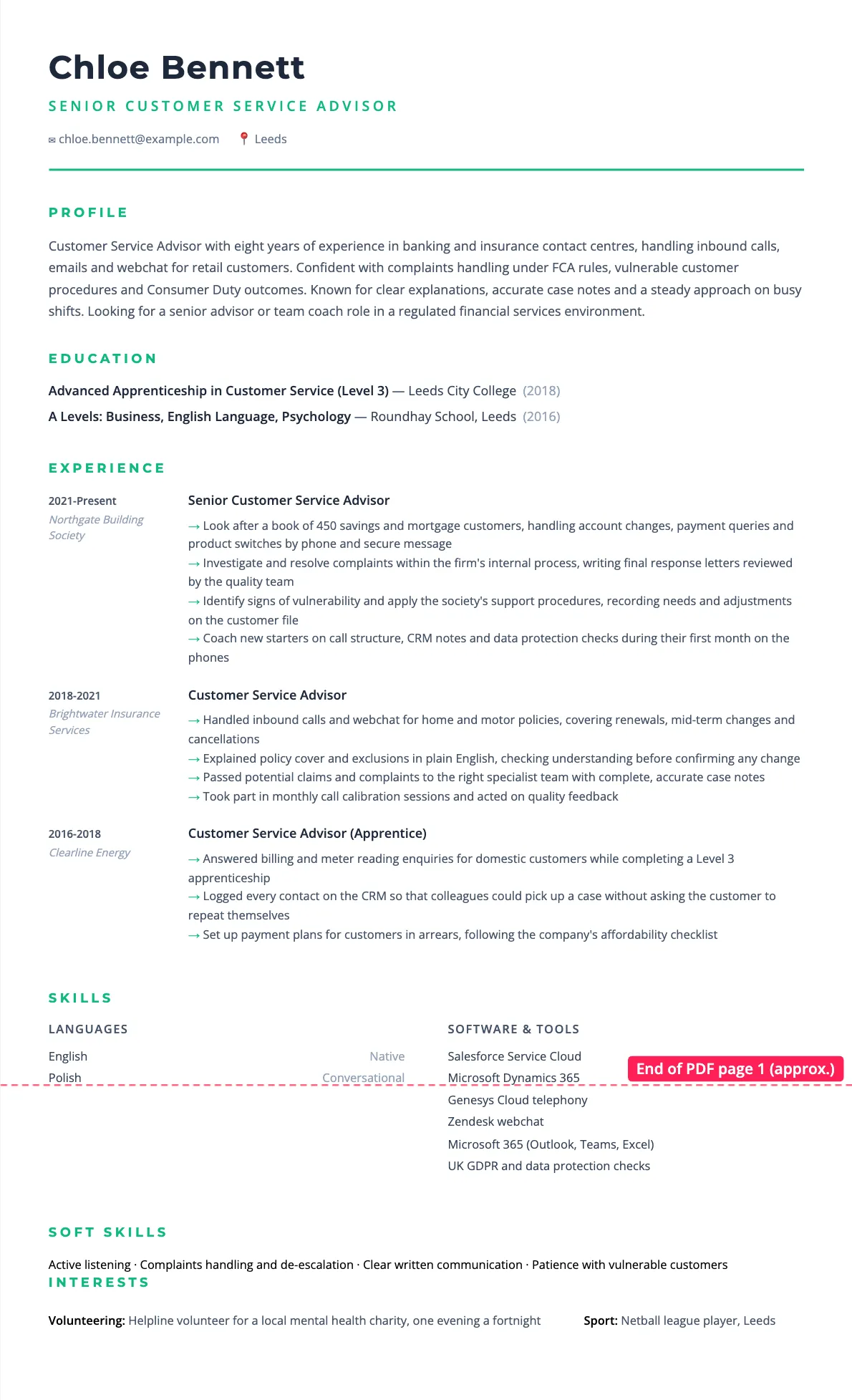
Customer Service Advisor CV Example and Writing Guide 2026
Read the guide →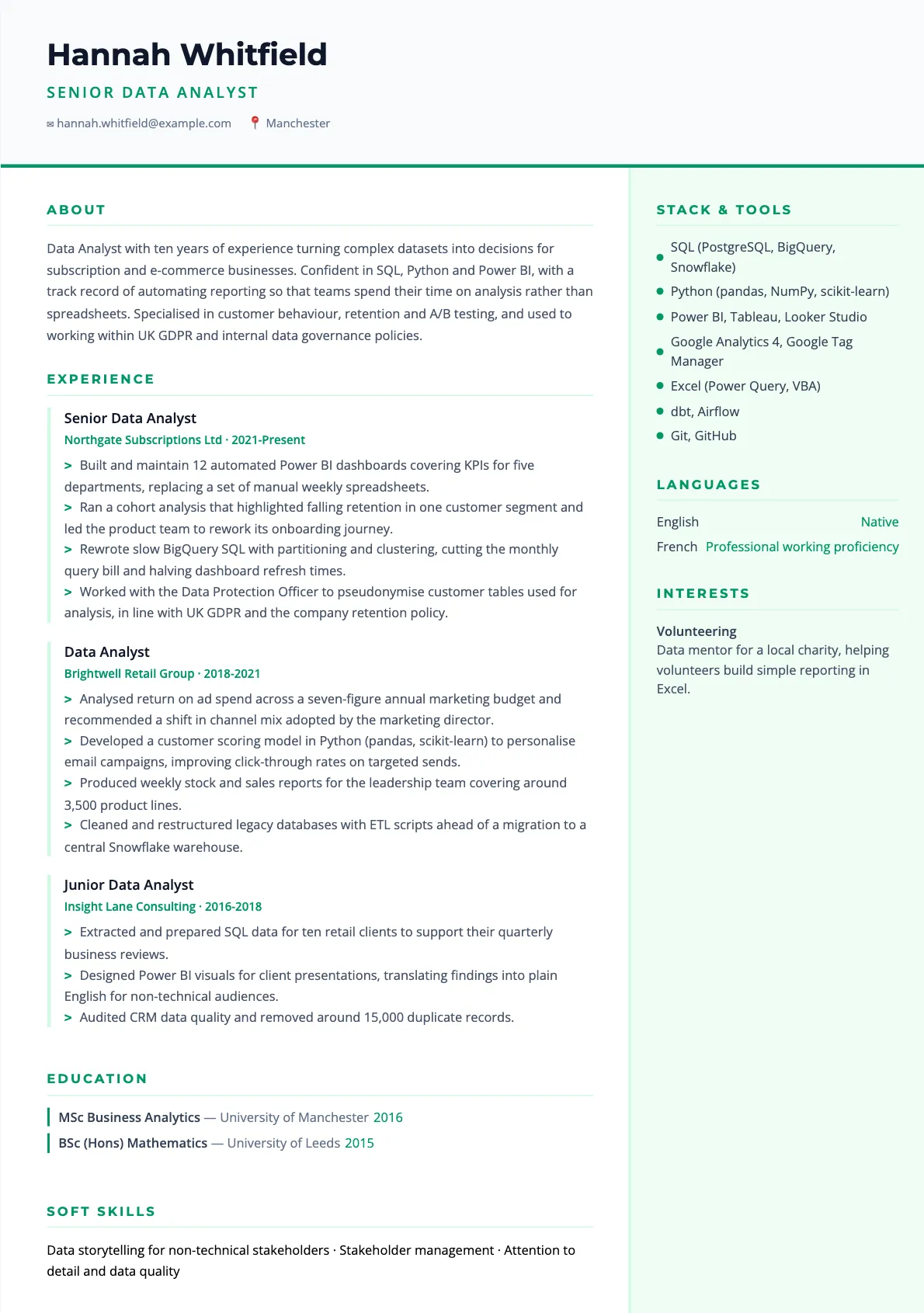
Data Analyst CV Example and Writing Guide for the UK
Read the guide →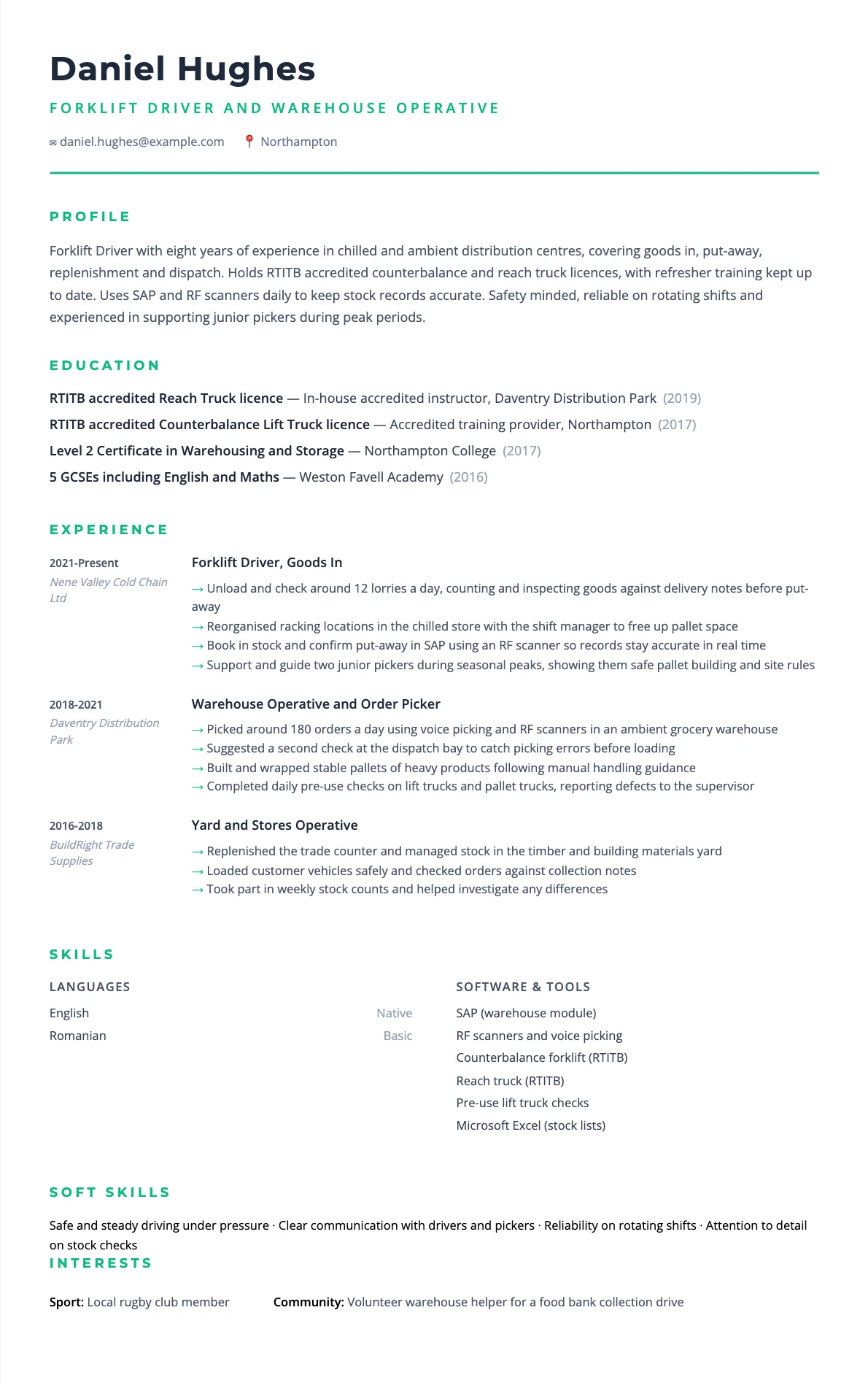
Forklift Driver CV Example and Warehouse Writing Guide 2026
Read the guide →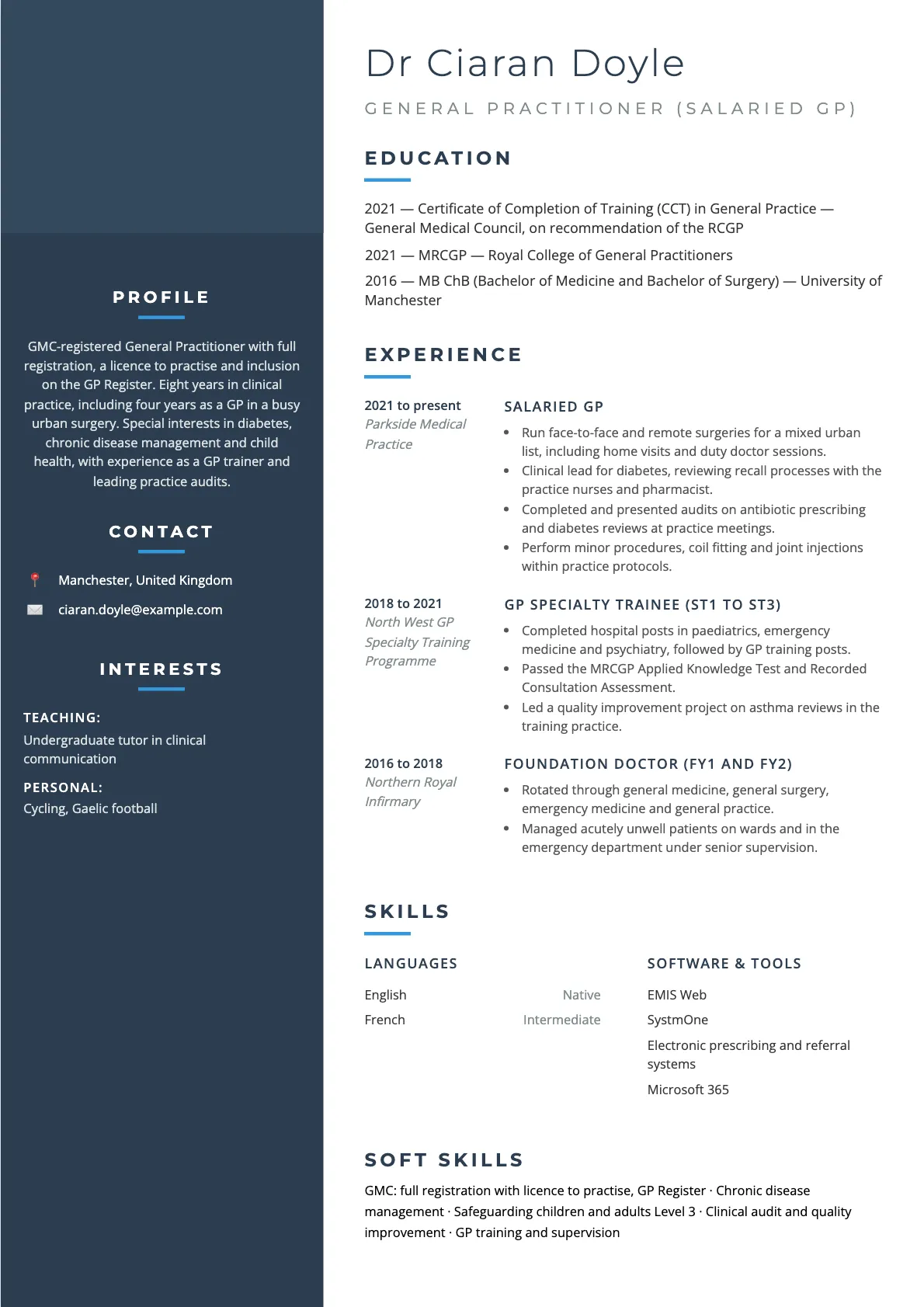
GP CV Example: General Practitioner CV for UK and Ireland
Read the guide →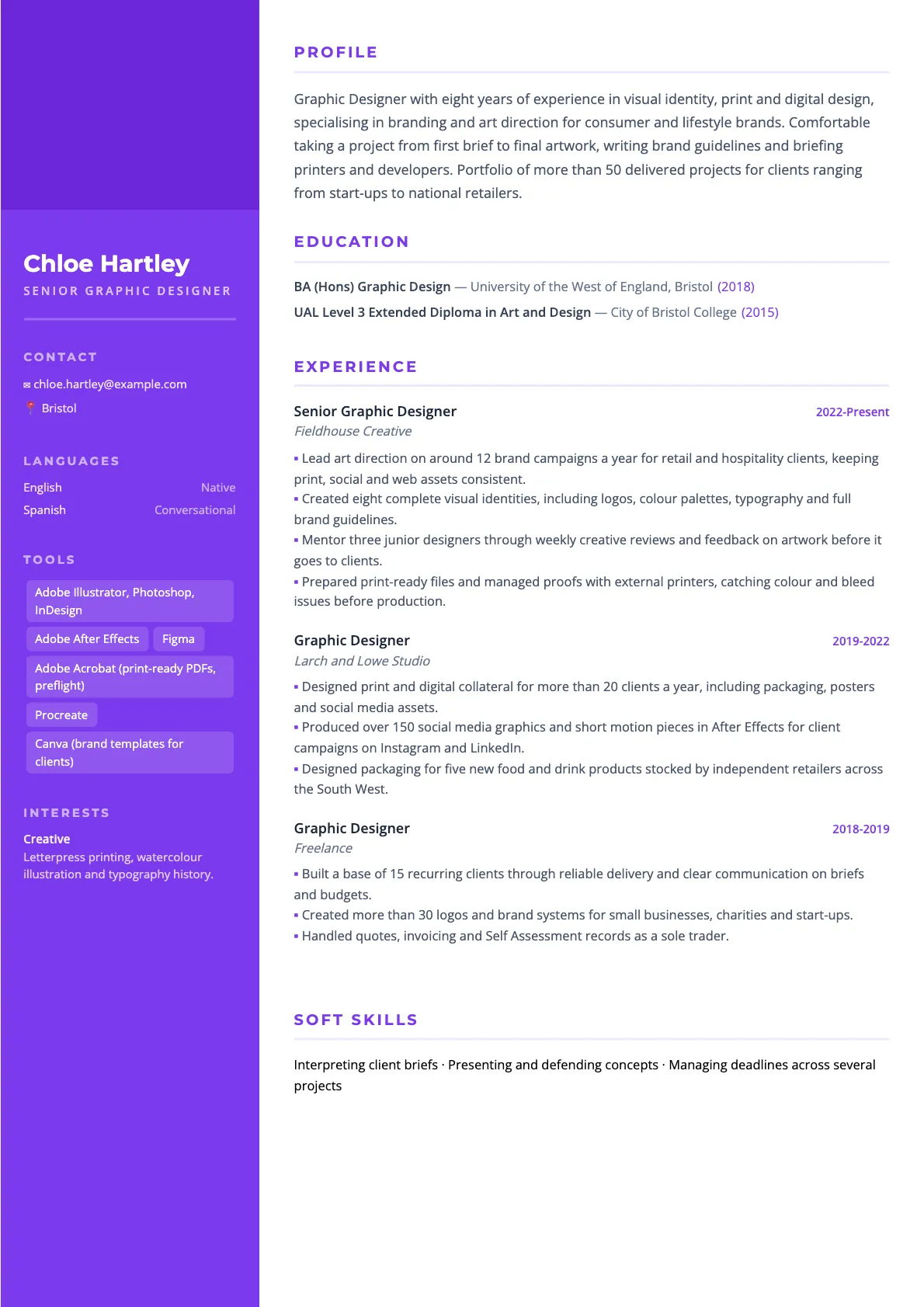
Graphic Designer CV Example and Writing Guide for the UK
Read the guide →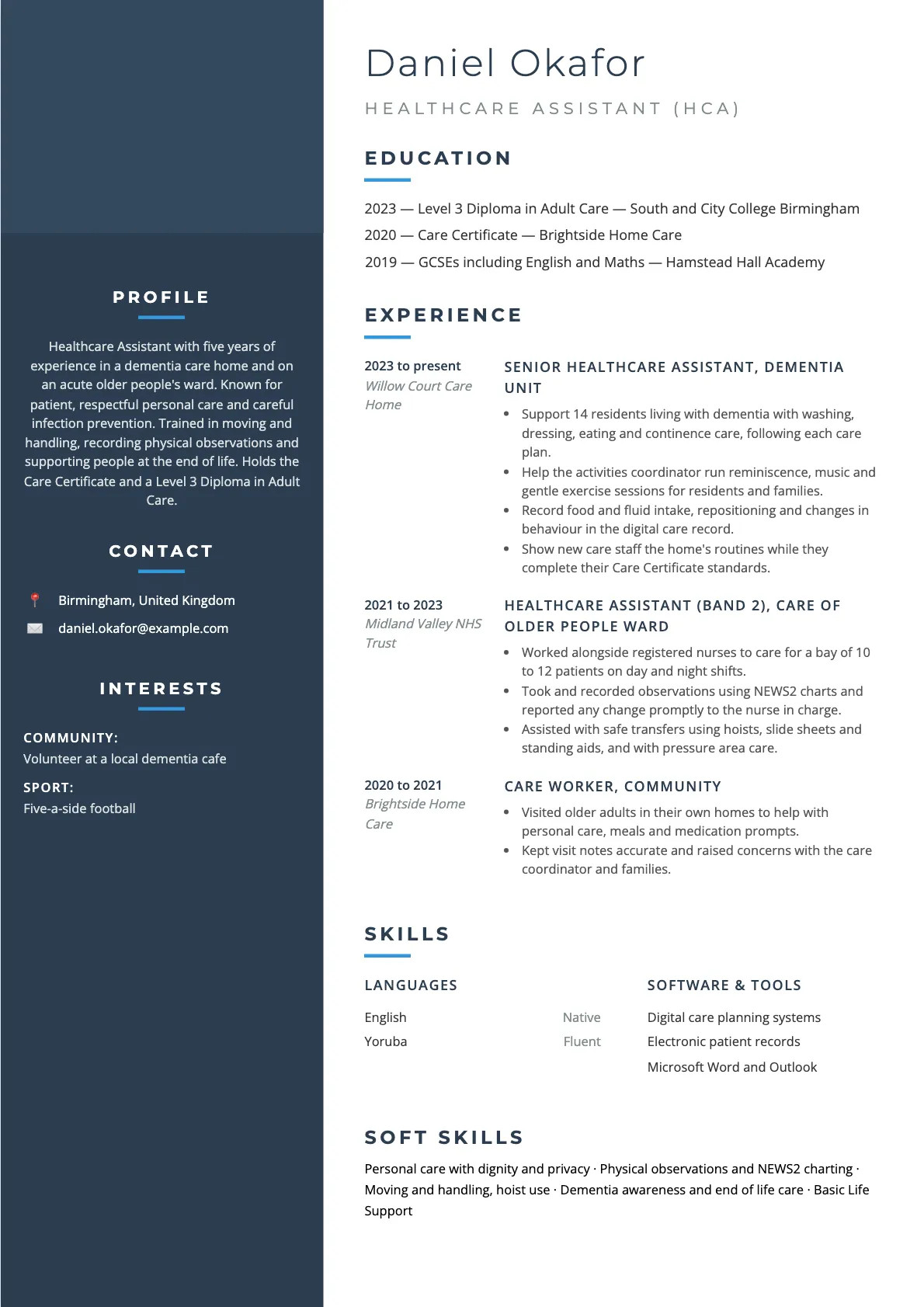
Healthcare Assistant CV Example for Hospital and Care Home Jobs
Read the guide →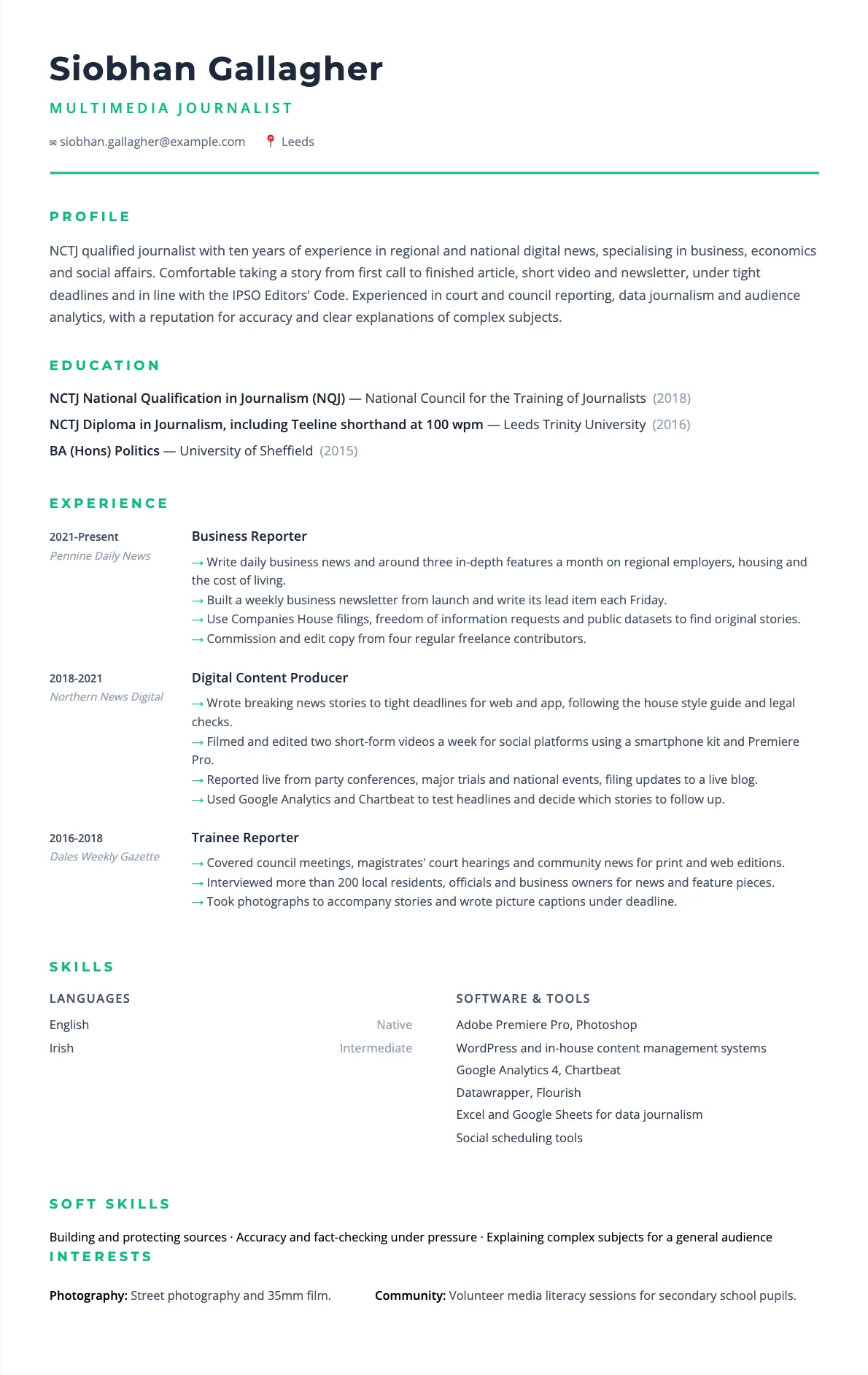
Journalist CV Example and Writing Guide for UK Newsrooms
Read the guide →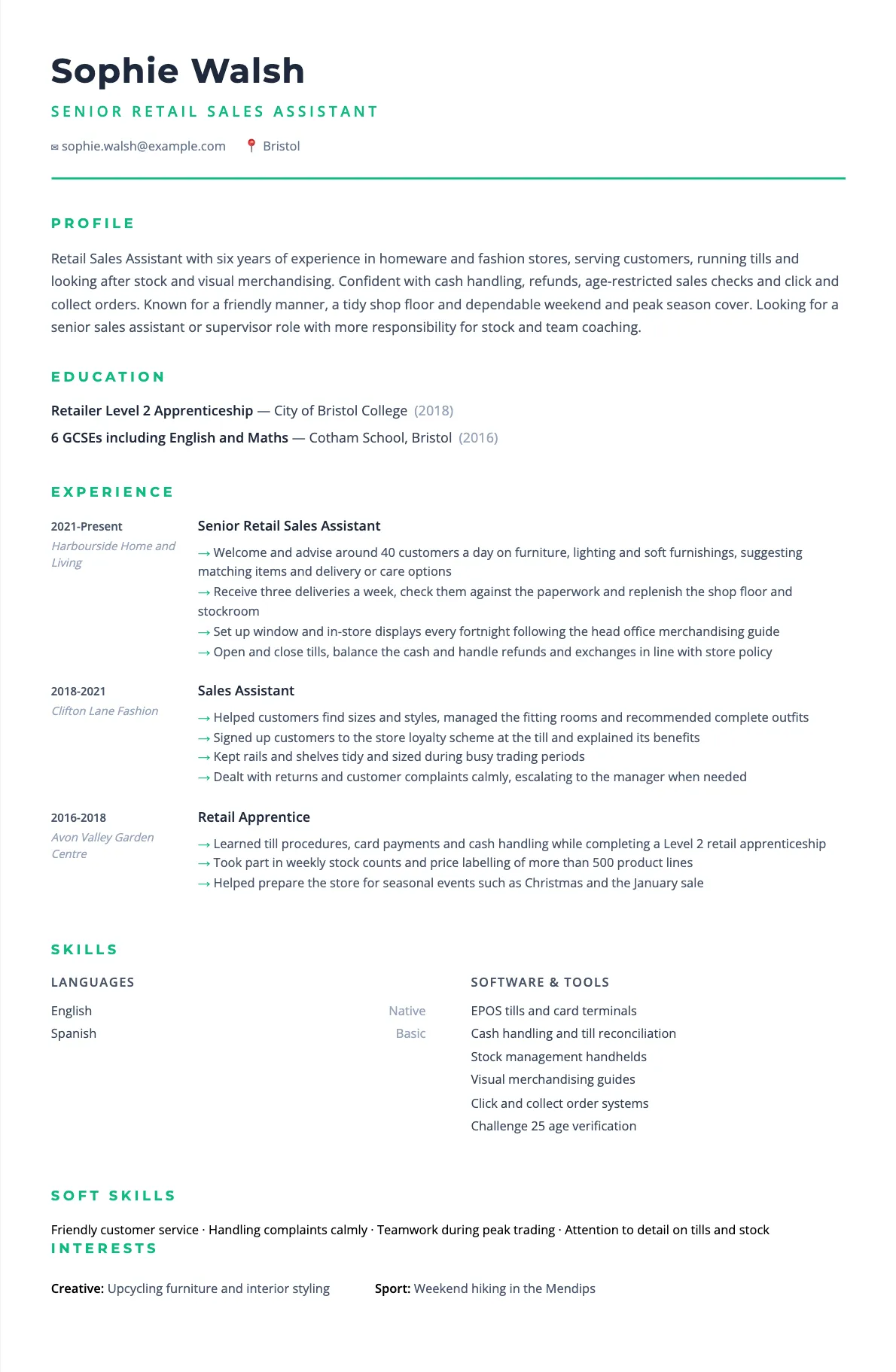
Retail Assistant CV Example and Writing Guide 2026
Read the guide →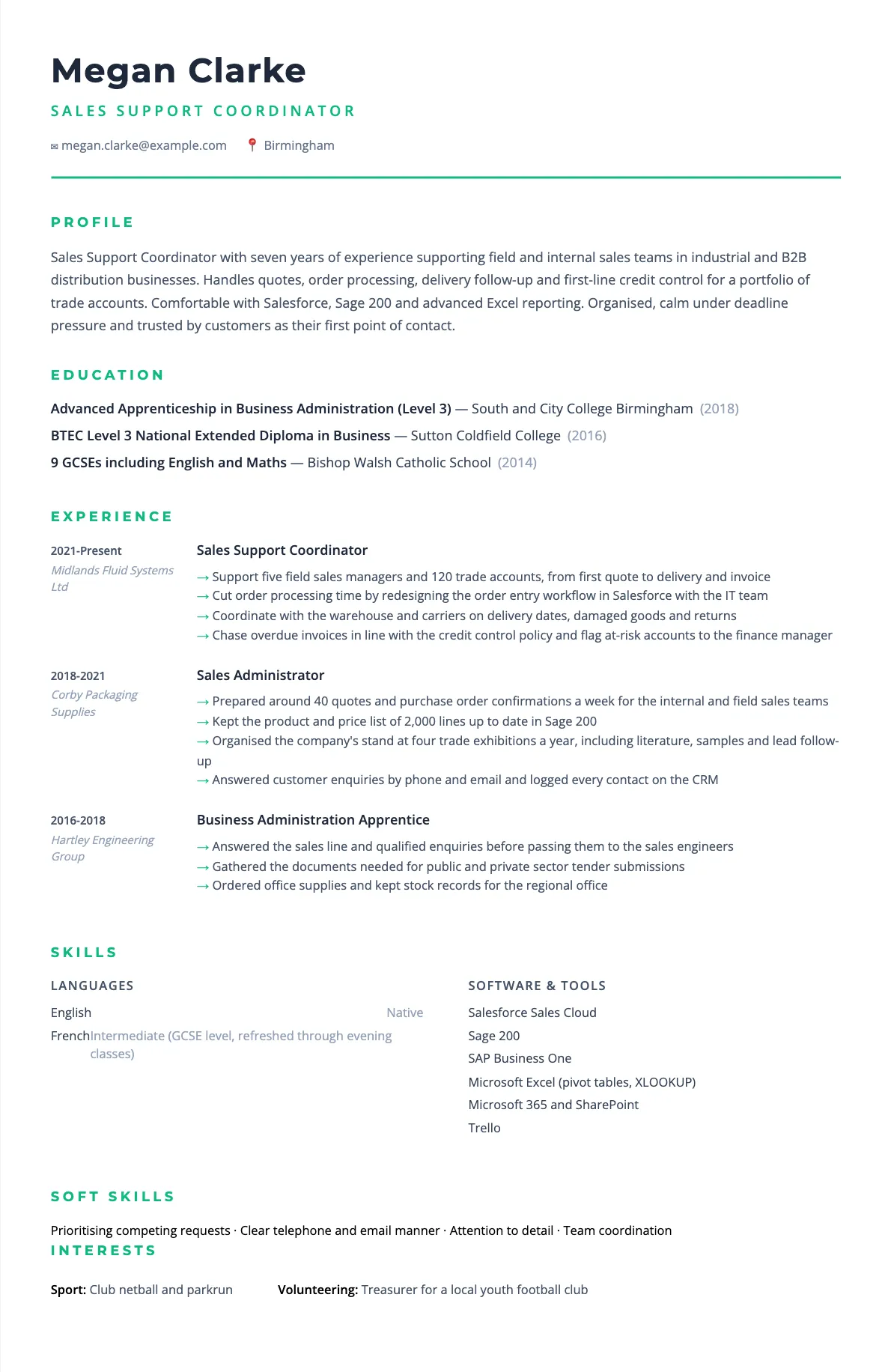
Sales Support Coordinator CV Example and Writing Guide 2026
Read the guide →
Secondary School Teacher CV Example and Writing Guide
Read the guide →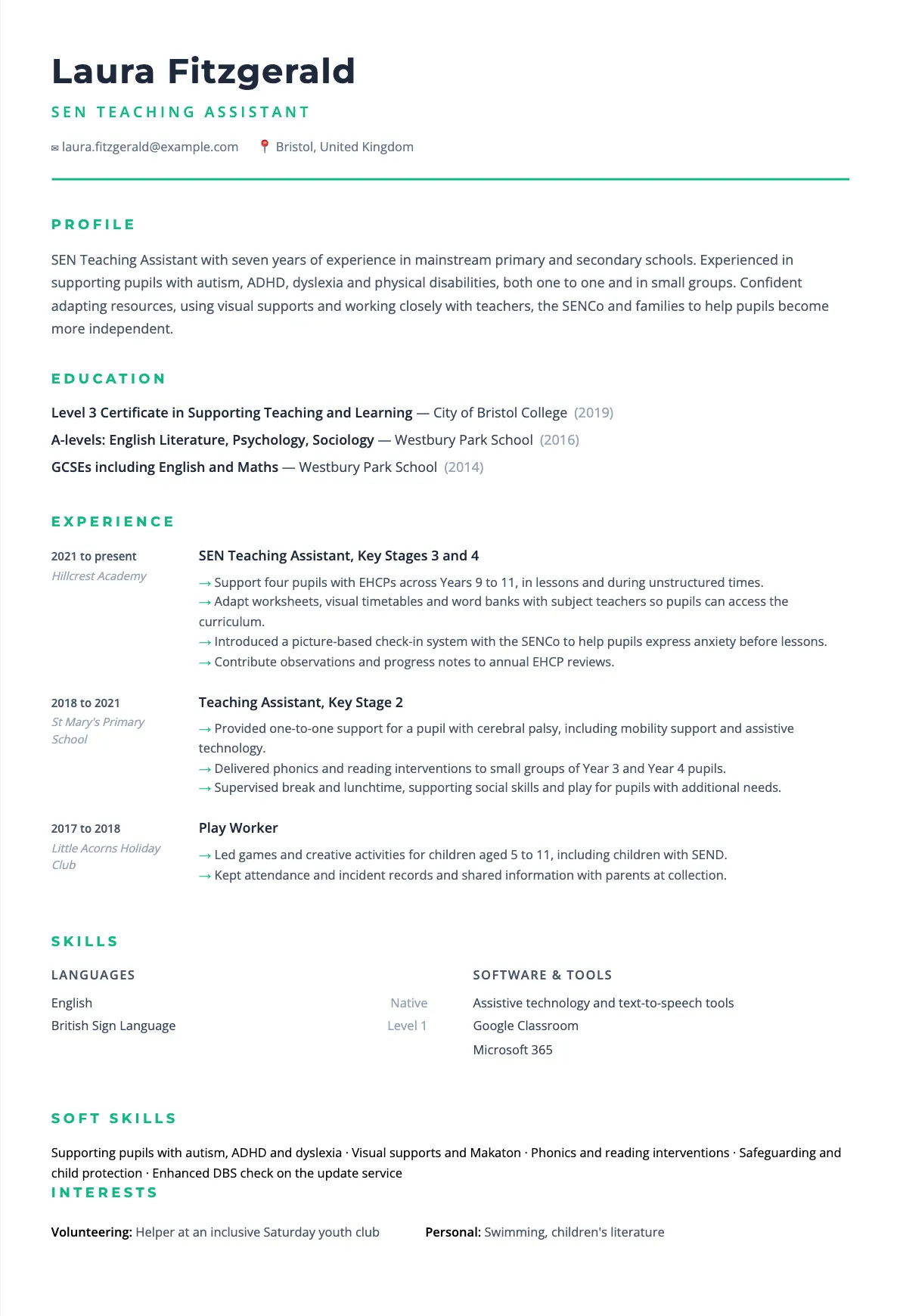
SEN Teaching Assistant CV Example for SEND Support Roles
Read the guide →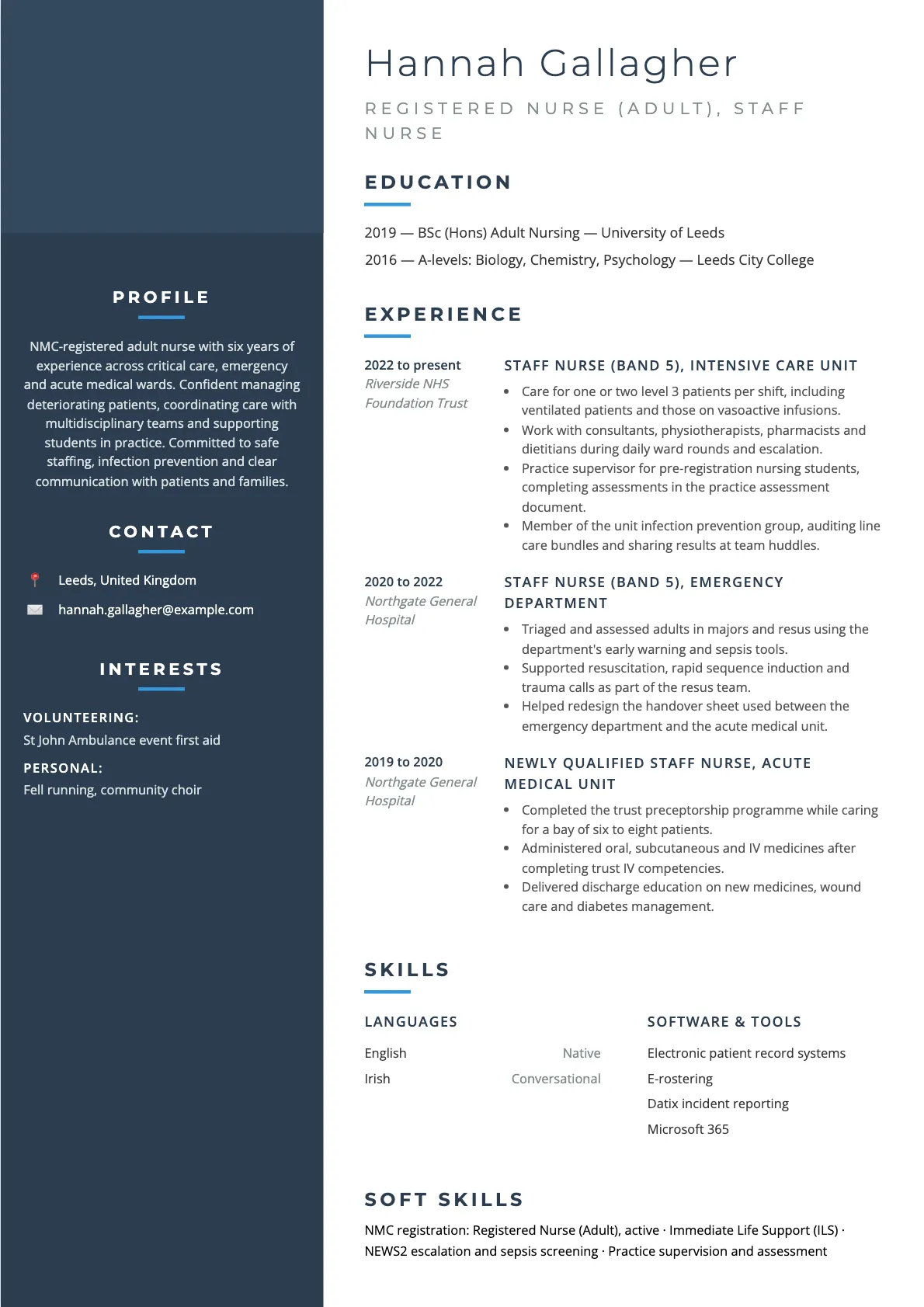
Staff Nurse CV Example: Registered Nurse CV for NHS Roles
Read the guide →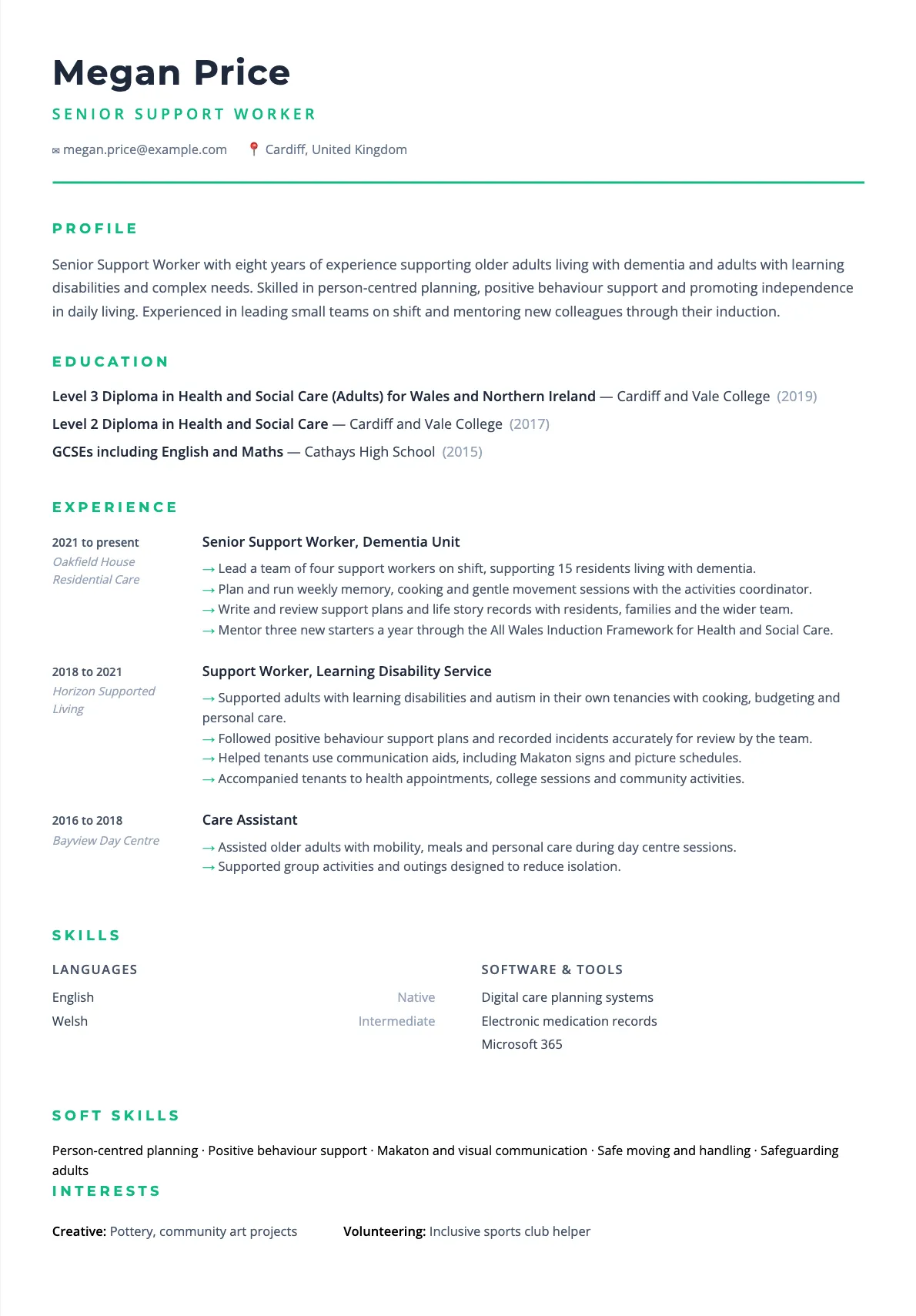
Support Worker CV Example for Learning Disability and Adult Care
Read the guide →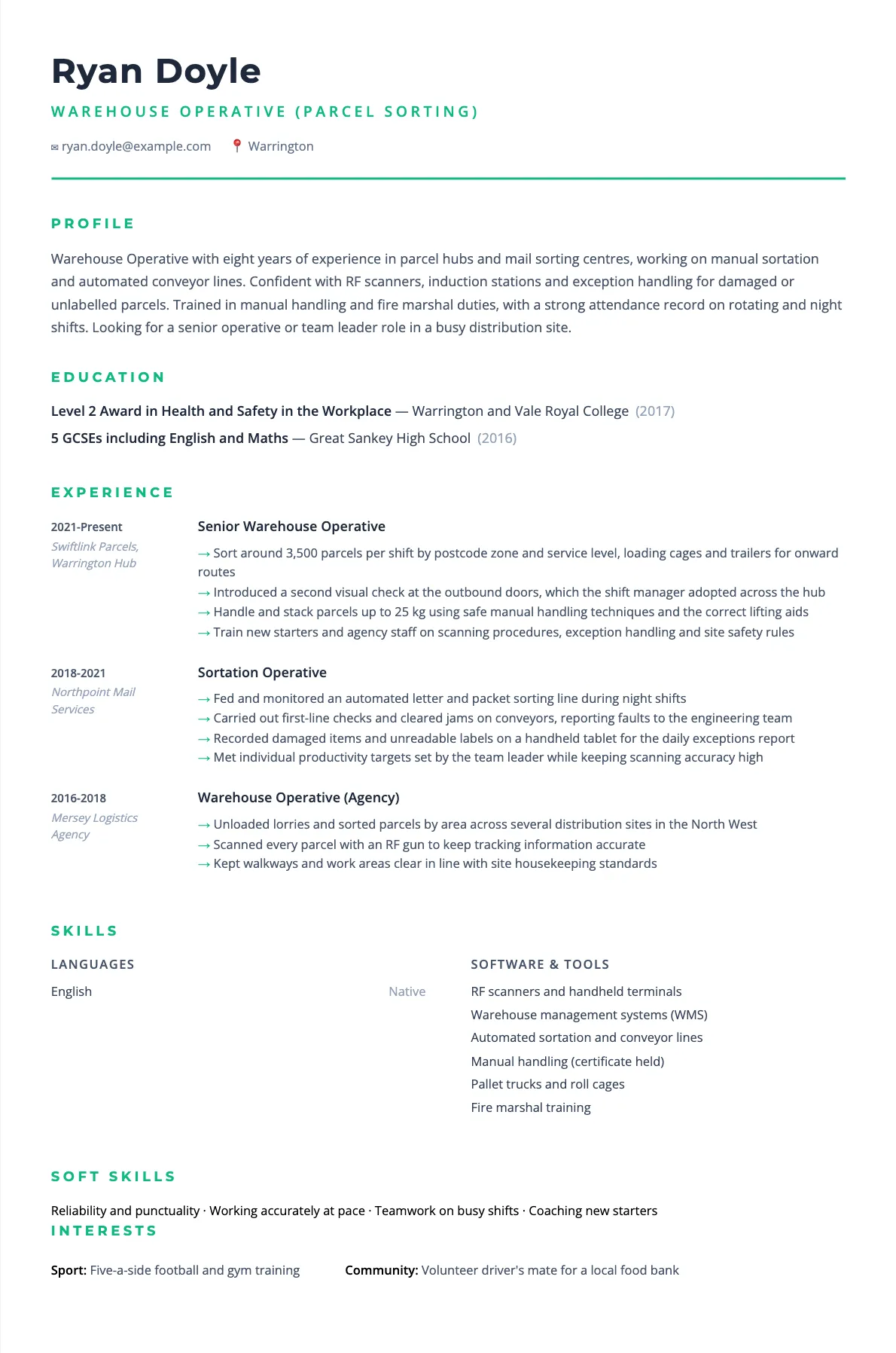
Warehouse Operative CV Example for Parcel Sorting Roles 2026
Read the guide →Examples and practical guides
Which CV examples fit your background?
Choose an example by career stage and responsibilities, not just job title. A student needs space for education and projects; an experienced applicant needs evidence from recent jobs. Compare the example with the actual posting before borrowing its structure.
List the tasks you could already perform and the experiences that demonstrate them. A retail role might show customer communication, scheduling or stock management. A university project might show research, teamwork or a specific technical method. Keep the evidence that helps the employer understand your fit, even when your previous job had a different title.
How should you adapt CV examples?
Copy the reasoning behind a bullet, then write your own evidence. A useful experience entry explains an action, its context and its outcome. Replace vague phrases such as responsible for customers with a specific description of the requests you handled and the tools you used.
Only add numbers you can explain and support. If you do not have reliable totals, describe the scope of the work instead: the type of customers, the procedure or the team involved. Do not inherit an example's invented employer, certification or achievement. Fictional material is a writing aid, never a record of your experience.
What belongs in a UK CV?
Make your experience, education and relevant skills easy to locate. Use recognizable section headings, consistent dates and a clear sequence from recent roles to earlier ones. For a UK or Irish application, leave out a photo and personal details such as marital status.
Include a professional email address and a phone number you actually check. A relevant portfolio or project link can give context to technical or creative work. Explain unfamiliar qualifications without claiming a UK equivalence you do not hold. Keep language levels and software knowledge accurate, because an interviewer may ask you to demonstrate them in practice.
How can you check the finished CV?
Read the exported document alongside the job advert before sending it. Check that the most relevant experience is visible near the top and that the wording reflects your actual contribution. Remove repeated duties that add no new information about your abilities.
Open the PDF and inspect its page breaks, dates and contact details. Copy its text into a plain text editor to check the reading order. An applicant tracking system, or ATS, may process the document differently depending on its configuration. A readable file helps, but no template or automated score can guarantee an interview or a hiring decision.
| Your situation | What to prioritise |
|---|---|
| First job or internship | Use education, projects and relevant volunteer work as evidence. |
| Experienced applicant | Lead with recent responsibilities and achievements you can explain. |
| Career change | Connect transferable skills to specific tasks in the new role. |
Frequently asked questions
Can I copy a CV example?
Use its structure, then replace all personal information and achievements. Your CV must describe work you actually did.
Can I use an example without work experience?
Yes. Use relevant coursework, projects, volunteering or student activities, and label each experience accurately.
Will a CV example guarantee an ATS pass?
No. Clear formatting and relevant wording help readability, but each employer uses its own screening process.