CV and cover letter resources
Support Worker CV Example for Learning Disability and Adult Care
A Support Worker CV should show how you help adults live as independently as possible, whether in supported living, residential care or day services. Employers want evidence of person-centred support, safe practice and teamwork, plus relevant training such as a Level 3 Diploma in Health and Social Care. This fictional example and the advice below will help you describe that work clearly.
Updated
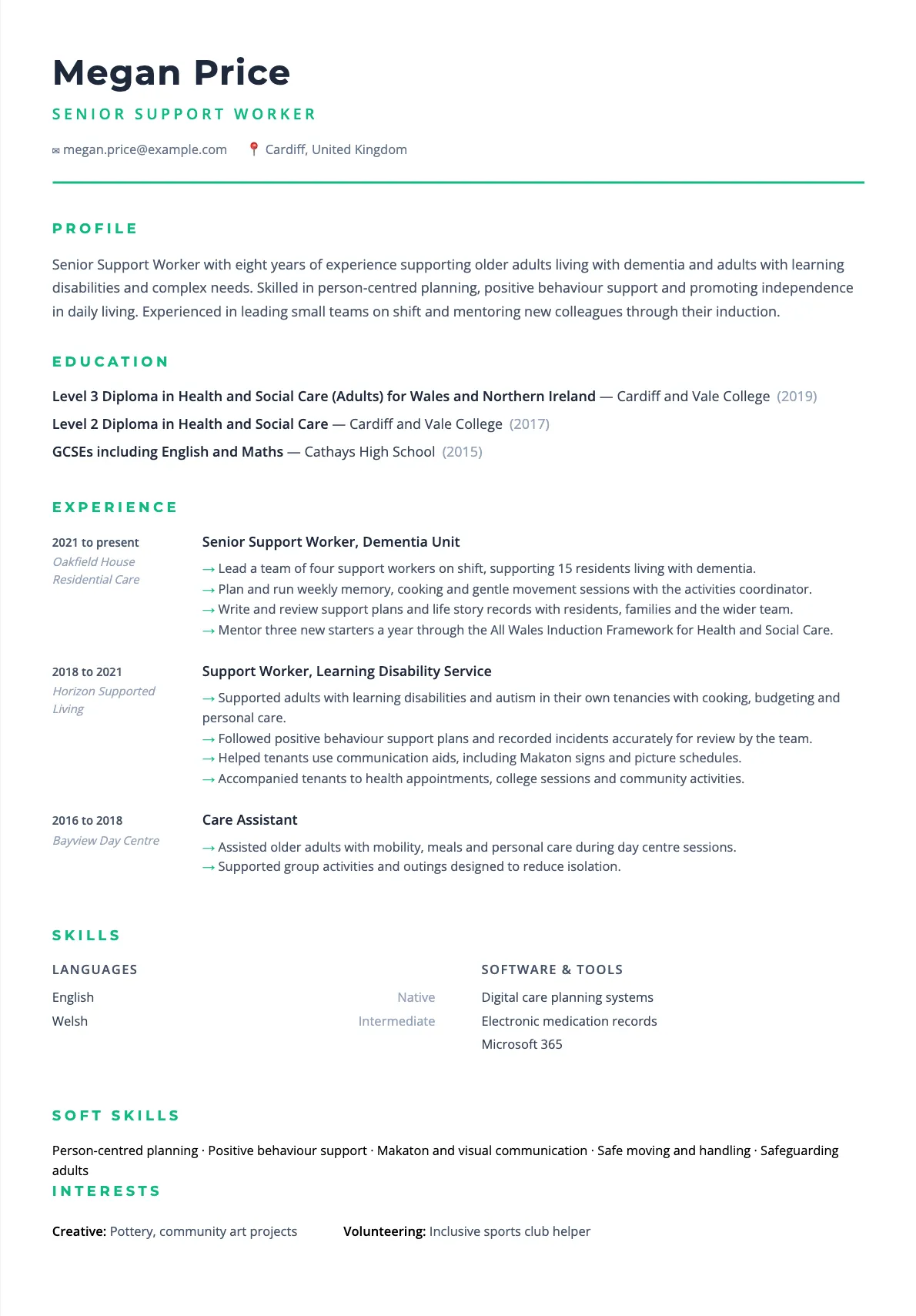
What does a Support Worker CV need to show?
It needs to show who you support, in which setting, and how you help them stay independent and safe. Support work covers supported living, residential homes, day services and home care, so name each setting clearly. Recruiters want to know whether you have supported older adults, people with learning disabilities, autistic adults or people with mental health needs.
Under each role, describe tasks that reflect real support: helping someone plan meals, manage money, attend appointments or keep up hobbies. Show that you follow support plans and contribute to them, rather than simply completing tasks for people. Mention your shift pattern and any sleep-in or waking night duties if they are relevant to the post.
Keep personal details to a minimum. You do not need a photo, date of birth or marital status on a UK or Irish CV. Your name, a professional email address and your town are enough, with references available on request.
Which qualifications should you list?
Put your Diploma in Health and Social Care first, then your induction (the Care Certificate in England, the All Wales Induction Framework in Wales) and relevant short courses. A Level 3 Diploma is often requested for senior roles, while a Level 2 Diploma or willingness to work towards one is common for entry posts. Write the exact title and awarding college, and add in progress if you have not finished.
Training frameworks differ across the UK and Ireland. In Wales, social care workers in many roles must register with Social Care Wales, and in Scotland with the SSSC, so mention your registration if you hold one. In Ireland, QQI awards in healthcare support or social care are common, and they should be listed under their real title.
Group mandatory training in a single line. Safeguarding adults, medication administration, first aid, moving and handling and food hygiene are expected in most services. Specialist training, such as positive behaviour support, autism awareness or epilepsy and rescue medication, deserves a separate mention.
How do you describe person-centred support on a CV?
Use examples that put the person you support at the centre, not your own tasks. Instead of writing that you did the cooking, write that you supported a tenant to plan and cook three meals a week. This shows you understand the purpose of support work and the values inspectors and families look for.
Regulators such as the CQC in England and Care Inspectorate Wales look closely at safety, the quality of care and whether people have a voice in their support. You can reflect this by mentioning accurate recording, respectful communication and involving people in decisions about their care. Avoid claiming inspection ratings as personal achievements unless you led a specific piece of work.
Be careful with sensitive information. Never include names, diagnoses or details that could identify the people you have supported. Describe needs in general terms, such as adults with learning disabilities and complex communication needs.
How can you move into a senior support role?
Show leadership through what you already do on shift, such as allocating tasks, mentoring or reviewing support plans. Senior Support Worker adverts often ask for experience of supervising colleagues, handling medication and communicating with families and professionals. Bring those responsibilities to the top of your bullet points.
Mention any training in supervision, medication competency assessment or care planning. If you have covered for a team leader or deputy manager, say so honestly, with the period and the tasks involved. A Level 3 Diploma, or progress towards a Level 4 or 5 qualification in leadership and management, supports the move.
Tailor your profile to each service. A learning disability provider and a dementia care home look for different experience. Read the job description and person specification, then use their language where it truthfully matches your background.
| Vague wording | Concrete evidence |
|---|---|
| Did activities with residents. | Planned and ran weekly memory, cooking and gentle movement sessions for residents living with dementia. |
| Helped people with daily tasks. | Supported tenants with learning disabilities to plan meals, manage budgets and attend appointments. |
| Handled challenging behaviour. | Followed positive behaviour support plans and recorded incidents accurately for team review. |
| Helped new staff. | Mentored three new starters a year through the All Wales Induction Framework. |
Frequently asked questions
What is the difference between a Support Worker and a Care Assistant?
The titles overlap. Support Worker is often used in supported living and learning disability services, with a focus on independence and community life. Care Assistant is more common in residential homes, with more personal care. Use the title from your contract.
Do Support Workers need a DBS check?
Roles supporting vulnerable adults normally require an enhanced DBS check in England and Wales, or the equivalent in Scotland, Northern Ireland or Ireland. Employers usually arrange it, so you can simply say you are willing to complete one.
Should I mention a driving licence?
Mention it if the advert asks for drivers or the role involves taking people to appointments and activities. Many community and supported living posts list a full UK driving licence as essential or desirable.