Resume and cover letter resources
Elementary School Teacher Resume Example and Guide
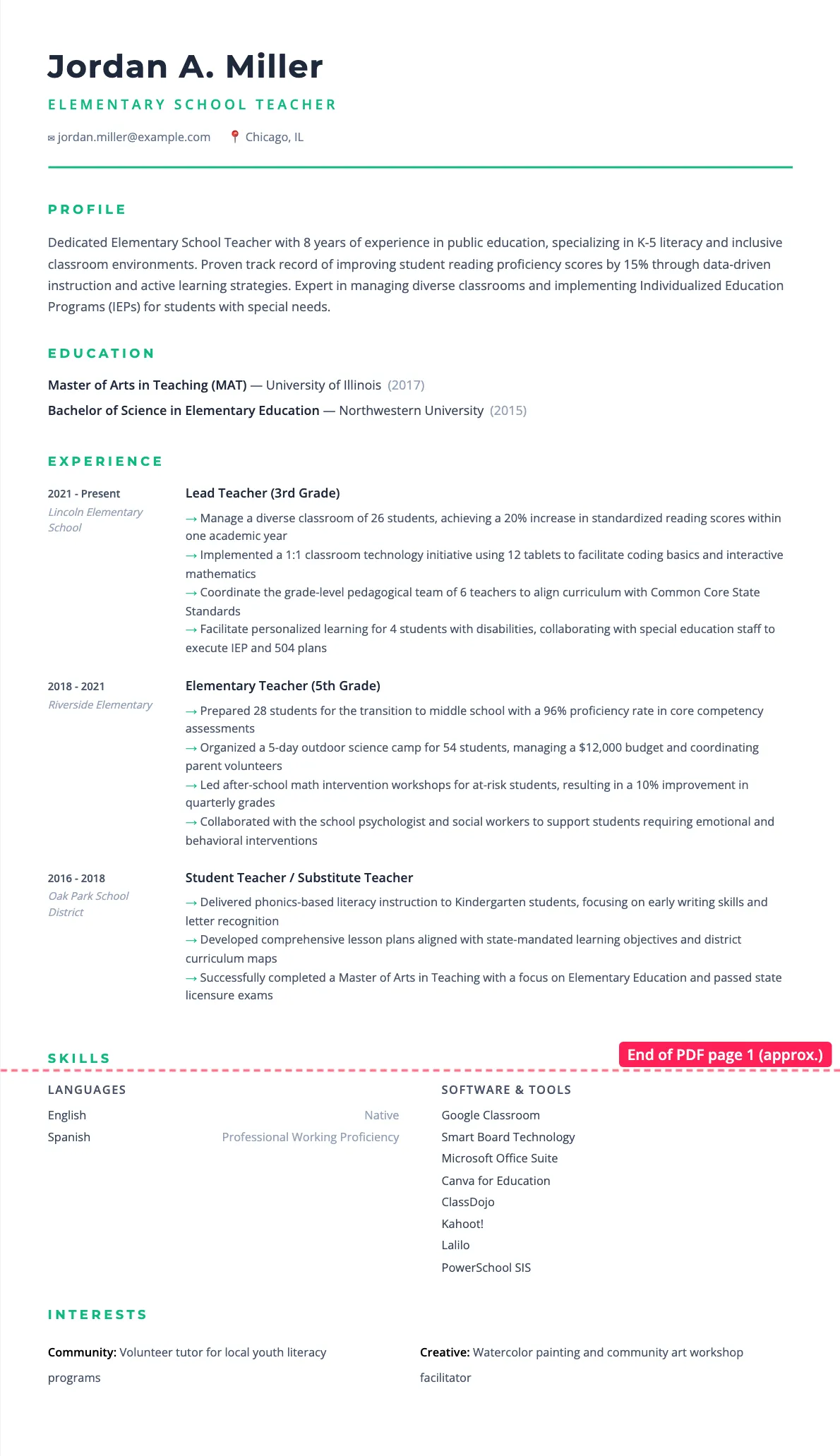
Creating a compelling elementary school teacher resume requires balancing pedagogical expertise with measurable student growth. In the United States, school districts prioritize candidates who demonstrate proficiency in differentiated instruction, state standards alignment, and classroom technology integration. This guide provides a fictional native sample and strategic advice to help you showcase your teaching credentials and classroom achievements effectively.
Updated
How should you structure an American teaching resume?
A successful US teaching resume must prioritize your professional license and classroom impact over generic duties. Start with a clear header and a professional summary that highlights your years of experience and specific areas of expertise, such as literacy or STEM. Unlike some international formats, American resumes should never include a photo, age, or marital status to comply with anti-discrimination laws.
Focus on a clean, reverse-chronological layout that allows recruiters to see your most recent classroom successes first. Ensure your teaching credentials are prominent and easy to find. List your state-specific certifications clearly, as these are the first things a district HR representative will look for.
If you are moving from a foreign system, such as France, do not claim your MEEF or CRPE is an American license. Instead, list your original degrees and state that you are in the process of seeking local credential evaluation. This transparency builds trust with hiring committees while showcasing your high level of international training.
What specific evidence demonstrates teaching excellence?
Quantifiable student growth and successful project management serve as the best evidence of your teaching ability. Instead of stating you taught math, specify that you increased standardized math scores by 15% through differentiated instruction. Use percentages, student counts, and budget figures to give your achievements scale.
Mentioning the number of students you successfully transitioned to the next grade level or the size of the budgets you managed for field trips provides concrete proof of your professional responsibility. Highlight your experience with diverse learner populations and inclusive practices. Mention your specific role in implementing IEPs (Individualized Education Programs) or 504 plans, as this shows you can work within the legal frameworks of the US education system.
If you have experience working with English Language Learners (ELL) or students with special needs, detail the specific strategies you used to support them. This evidence proves you are prepared for the realities of modern, heterogeneous American classrooms.
Which technical skills are most relevant for teachers in 2026?
Proficiency in Learning Management Systems (LMS) and data-driven assessment tools is non-negotiable for modern educators. You should list specific platforms like Google Classroom, Canvas, or PowerSchool to show you can handle administrative and instructional technology. Mentioning your ability to use interactive tools like Smart Boards or educational software like Kahoot!
demonstrates that you can engage students in a digital-first environment. These tools are often the backbone of daily classroom operations in most US school districts. Beyond software, emphasize your ability to teach digital citizenship and basic technology literacy.
As schools integrate more devices, teachers who can guide students in safe and productive internet use are highly valued. If you have experience with basic coding platforms like Scratch or digital portfolio tools, include them. This shows you are not just a user of technology but an educator who can prepare students for a technologically advanced future.
How do you adapt a foreign teaching background for the US?
Focus on the functional scope of your previous roles rather than direct title equivalency. For example, if you worked as an AESH in France, describe yourself as a Paraprofessional or Special Education Assistant to help American recruiters understand your responsibilities. Explain that you provided one-on-one support for students with disabilities and implemented behavioral interventions.
Avoid asserting that a foreign qualification automatically grants you the right to practice in the US, as licensing is strictly regulated by individual states. Highlight the rigor of your international training while acknowledging local requirements. A French Master MEEF represents significant pedagogical training that is highly valuable, even if it requires a local credential evaluation for US equivalency.
Describe the specific age groups and subjects you taught, using American terminology like Elementary Education or K-5. Always advise the reader that you are aware of the need to check with the state Board of Education for specific licensing requirements.
| Weak Description | Concrete Achievement |
|---|---|
| Taught a 3rd grade class. | Managed a diverse classroom of 26 students, improving reading scores by 20%. |
| Used technology in the classroom. | Integrated 1:1 tablet usage for daily math interventions and coding basics. |
| Attended IEP meetings. | Collaborated with specialists to implement IEP goals for 4 students with special needs. |
| Organized school trips. | Managed a $12,000 budget for a 5-day science camp for 54 students. |
Frequently asked questions
How should I list my teaching credentials?
State the credential you actually hold, its issuing authority and the relevant grade levels or subject areas. Check the district posting for any additional details it requests. If an application is still pending, describe that status accurately rather than presenting the credential as already granted.
How do I distinguish between a Lead Teacher and a Teaching Assistant?
A Lead Teacher is responsible for curriculum design, primary instruction, and overall classroom management. A Teaching Assistant or Paraprofessional provides supportive care and implements plans created by the Lead Teacher. Ensure your job titles and bullet points clearly reflect whether you were the primary instructor or in a supportive role.
How should I describe student progress without exposing private information?
Use anonymized classroom or group results and explain the period, assessment method and teaching action behind them. Avoid names, identifiable student records and unsupported claims that one intervention caused every improvement. If you do not have reliable figures, describe the instructional adjustment and the evidence you used to evaluate it.